Rethink the workflow. Start with your own documents.
Guided questions turn paper procedures into digital activities, handovers and records. You review the proposed structure and bring it into Augmenticon ONE as an editable draft.
You see the whole shape before anything is created
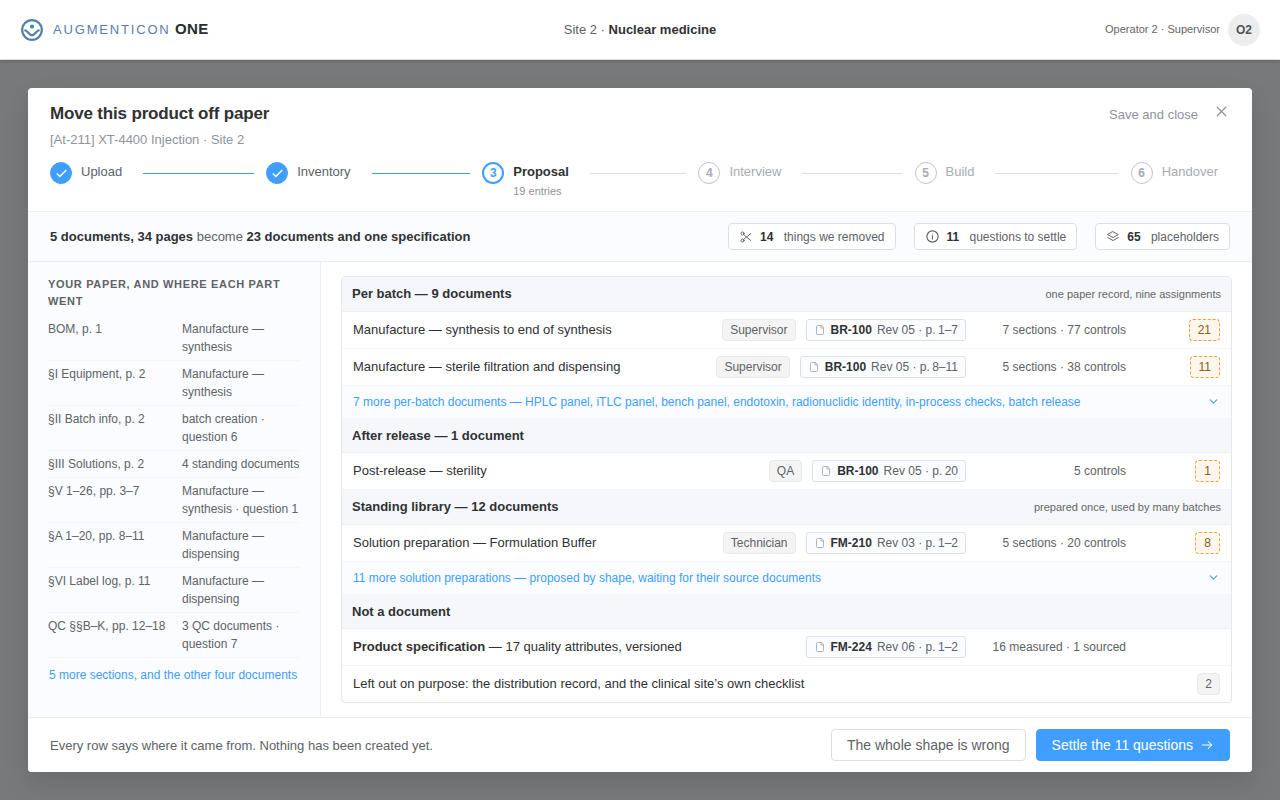
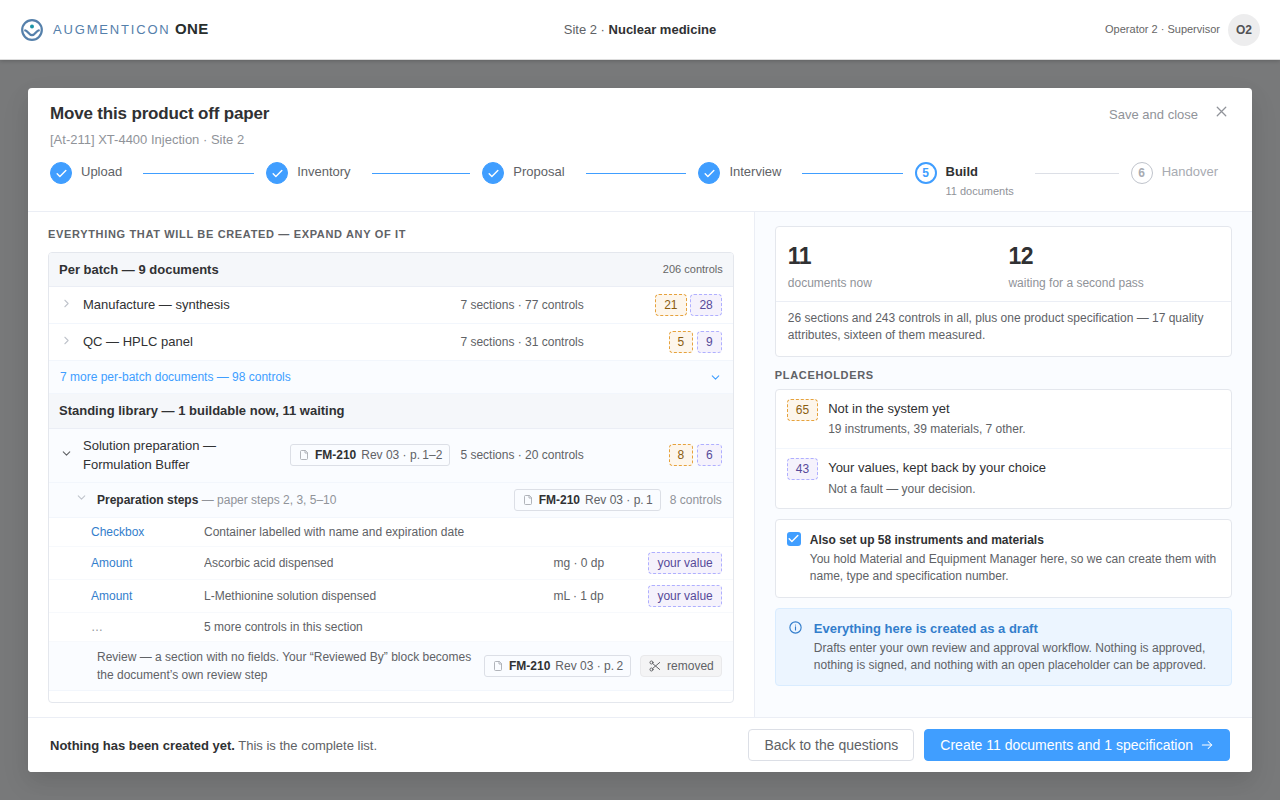
Your paper is on the left, section by section. The proposed structure is on the right, and every row names the document, revision and pages it came from, and the role that will execute it. One paper record becomes nine documents worked per batch, twelve standing documents that many batches share, and one product specification.
Nothing has been created at this point. The two buttons at the foot are “settle the questions” and “the whole shape is wrong”.
02
It asks what paper does not say
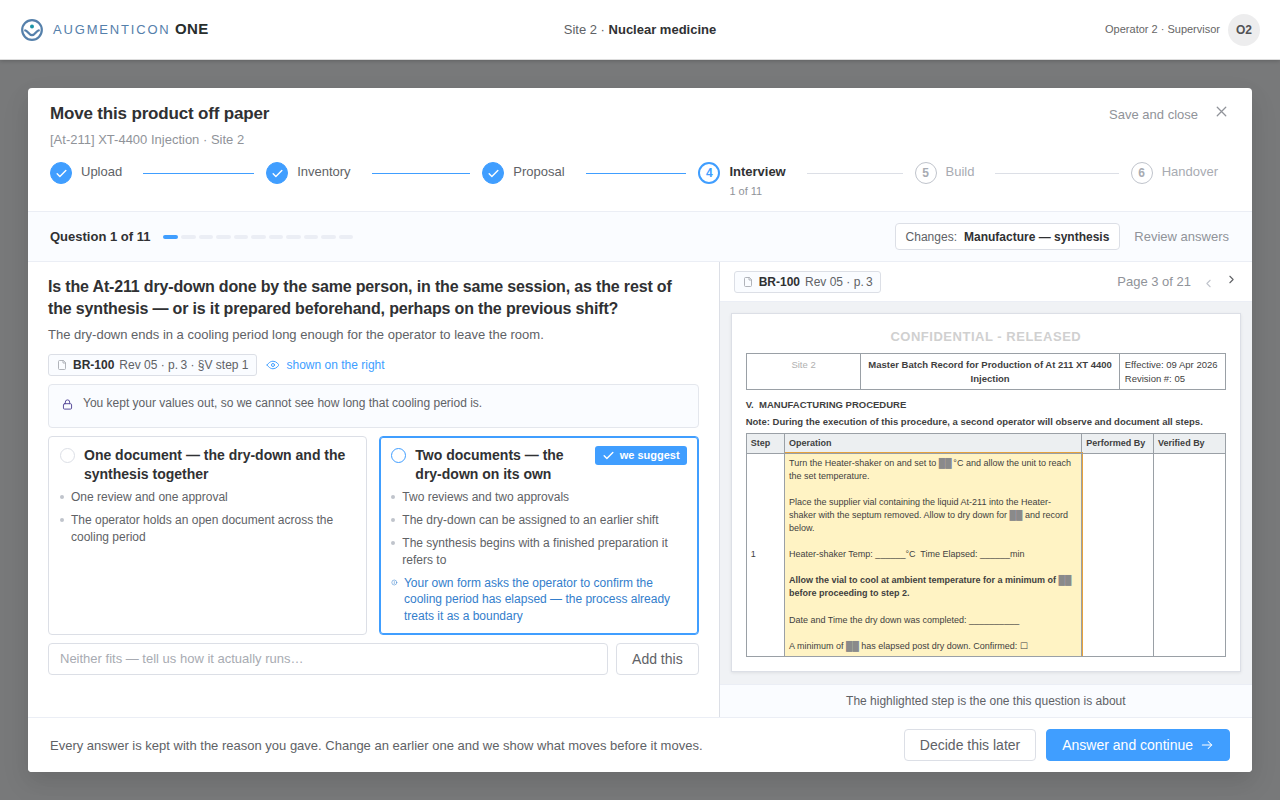
A form records what was done, not how the work is organised. Whether a dry-down that ends in a long cooling period belongs with the synthesis or is a document of its own depends on shifts and approvals, which the page does not state. So the question is asked, with the source page open beside it, the consequences of each option listed, and a suggestion based on your own form.
Eleven questions for this product. Every answer is kept with the reason you gave.
03
Six stages, in one sitting or several
01 · Upload
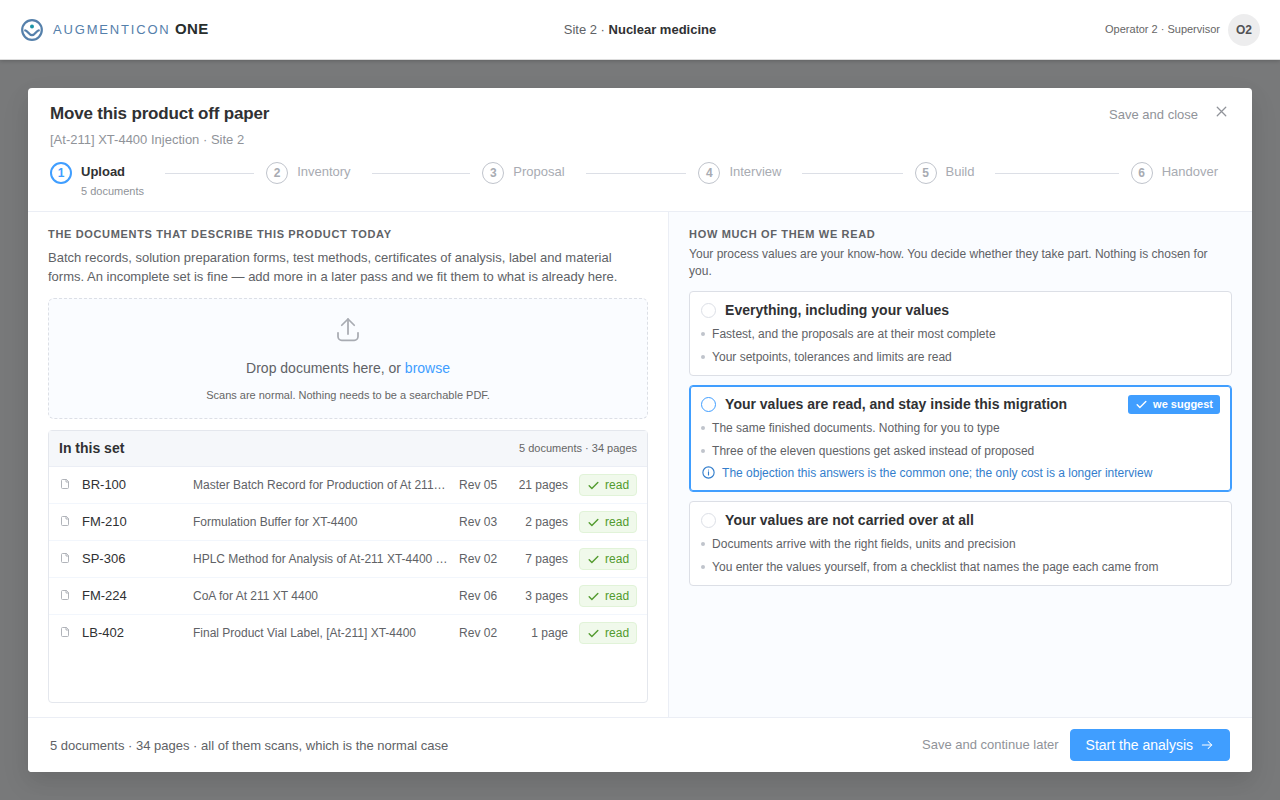
Scans are the normal case. You decide whether your setpoints and limits take part.
02 · Inventory
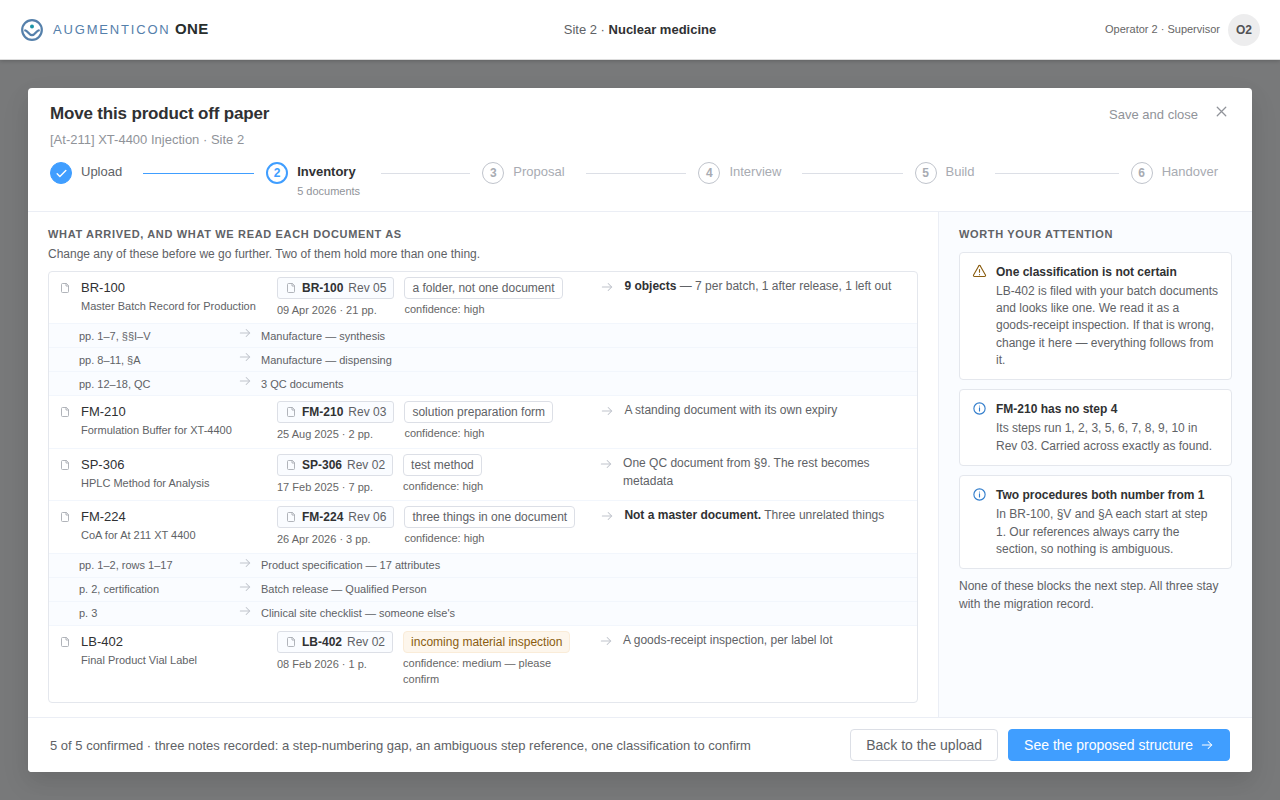
What each document turned out to be, with its confidence. Three of the five held more than one thing.
03 · Proposal
Your paper, and where each part of it went. Still nothing created.
04 · Interview
The eleven things paper does not say, each with its source page open.
05 · Build
The complete list, expandable down to the single control, before anything is written.
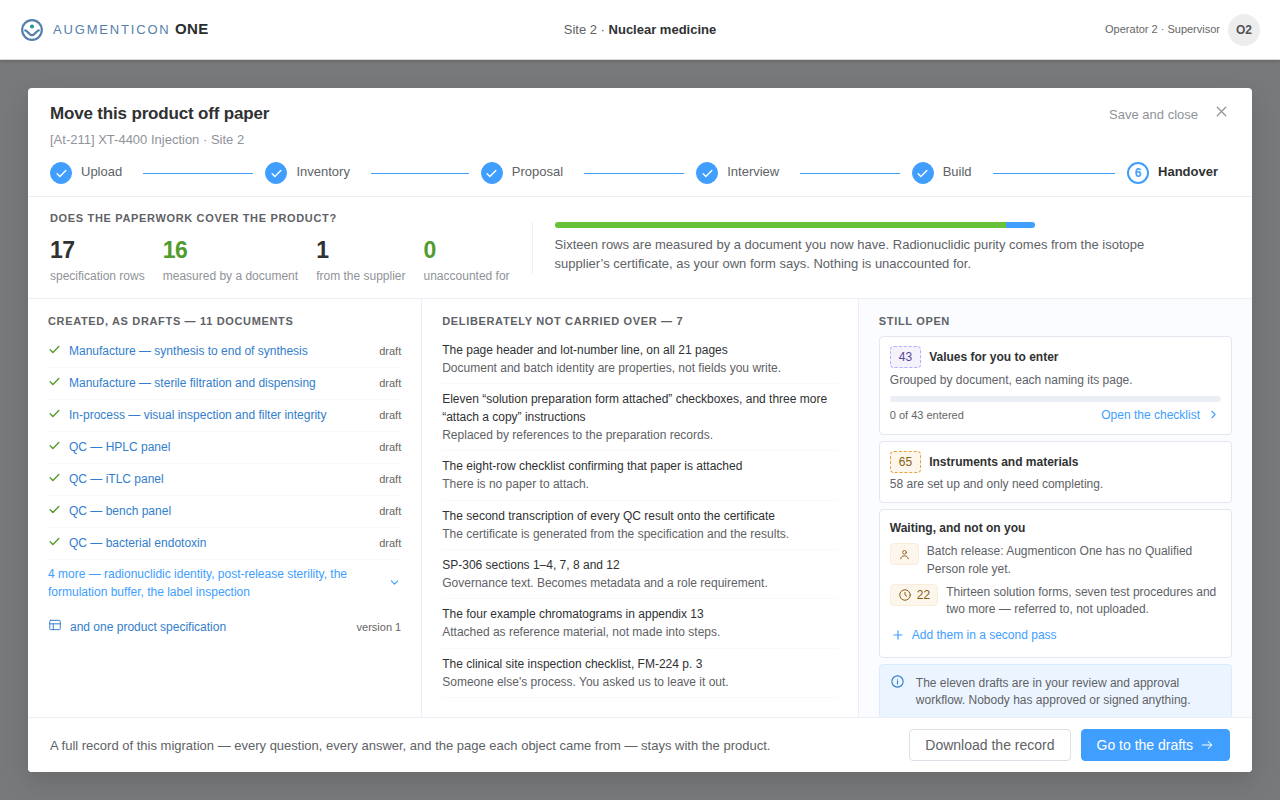
06 · Handover
Does the paperwork cover the product? Seventeen specification rows, none unaccounted for.
A migration usually runs over several days. You can stop and continue later at the same stage.
04
What you are left with
Drafts, and nothing else. They enter your own review and approval workflow, like any document written by your own staff. Nothing is approved, nothing is signed, and a document with an open placeholder cannot be approved at all.
Every row names its source. Document, revision and page — so a reviewer can check the proposal against the paper without being told where to look.
Setpoints and limits can be held back. Hold your setpoints, tolerances and limits back and you get the same finished documents, with those numbers left for you to enter from a checklist that names the page each one came from.
Fourteen paper habits do not come across — the lot-number line on every page, the instructions to attach a copy of something, the second transcription of every result onto the certificate — each one listed with its reason.
05
The other four stages
Upload — and how much of it we readInventory — what each document turned out to beBuild — everything that will be created, before it isHandover — does the paperwork cover the product?
About these screens
They follow one real migration from the first upload to the handover. The counts, the sections and the page references are the real ones. The site, the person, the product, the isotope and every document number are invented, and the screens are renders of the design.